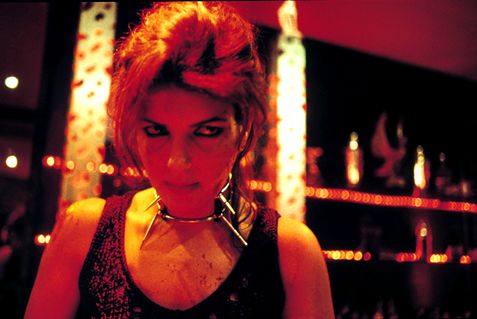
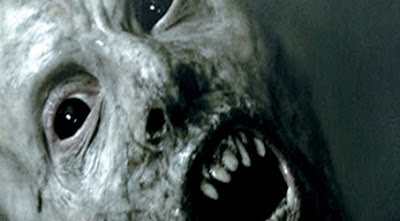
Showing posts with label France. Show all posts

Monday, October 10, 2011

Baise-moi (2000)

Distributed under the title Rape Me in some parts, Baise-moi actually means Fuck Me. And this is precisely what it means within the narrative. The two protagonists do not wish to be raped. Actually, one of them is a rape victim gone mad, using a macho brand of violence to finally exert some control over her sexual life, making male desire a mere operative tool in her own quest for satisfaction. And so, it is not surprising that the two directors would categorically reject the erroneous title, which was probably used only to eschew the use of the word "fuck", hence pointing out to what controversy is all about in the US: vulgar language and its pervasive influence on youth. The fact that the word 'fuck' is the most precise and most logical term to describe the random sexual encounters depicted in the film has no bearing on anyone who would have the nerve to refer to it as Rape Me, a title that should be mercilessly hunted down and invalidated instead of the film itself.

Baise-moi and the art of depicting "coups de bites" (dick hits):
women need not be subtle when tackling phallocentric tastes

That said, with nary any element overstepping the boundaries of traditional exploitation cinema, save for the gender of its directors, Baise-moi should've gracefully dodged any controversy, had it not been for the uptight rating boards who have now taken the burden of moral authority in light of the dwindling influence of the Church. Yes, the film does contain some hardcore sex. So, you just need to apply the rules concerning pornographic material, slap the film a well-deserved X-rating, and get over it already! There's no need to make a big fuss about it. Even I, who rarely ever has sex, still consider it an integral part of life, finding no discomfort in its graphic depiction onscreen. Furthermore, sex is a central tenet of the film, which unfortunately plays more like a trashy genre film that any truly dramatic attempt at depicting their characters beyond the veil of flesh. And so its depiction is crucial to narrative construction. After all, the story does concern two women's quest for freedom in a phallocentric world, which constitutes but a novel angle with which to frame an otherwise sub-par serial killer road movie. Their re-appropriation of sex within the scope of their own, personal desires thus obviously warrants its onscreen depiction, and perhaps, just perhaps was controversy born out of that deconstruction of the male dictates in terms of pornography. As for the parallel between sex and violence, it should come as no surprise for genre film fans, whom are mature enough to understand that they are both intrinsic human desires, and perhaps the last visible remnants of what lies beyond the masks of normalcy which we all slavishly adorn to better thread waters in the sea of business.

Starring porn stars Karen Bach and Raffaëla Anderson, the narrative concerns two disgruntled women who commit their first murder while under the throes of passion, both during an argument about the agency of men over their respective lives. Hooker Nadine strangles her roommate after she comments on her limp attitude toward shady boyfriend Francis, while poor immigrant Manu shoots her own brother when he dubs her a slut after she was raped in an underground parking garage. Stealing some 10,000 francs from her brother's stash, Manu then kidnaps Nadine, whom she randomly meets on the subway, and forces her to drive them to Paris, where they eventually team up and engage in a lucrative killing spree involving numerous sexual pit stops. After we see the girls shoot and fuck their way through half of France, in what basically amounts to an X-rated version of a romantic teenage fantasy, the film ends on a surprisingly harmonious note, making us contemplate the void in the protagonists' lives in particularly effective fashion while opening up the dreary perspective of absence with rare emotional precision, which helps balance the nihilistic stance of the narrative a bit.

Discussing suicide as the only worthy solution to their woes, the
protagonists play along the dotted lines of outsider narrative,
which uses nihilism as self-explanatory dramatic fuel

Shot with a cheap, hand-held video camera that garners interesting results only when used subjectively (such as when it adorns the viewpoint of Nadine getting fucked or that of a young thug getting beat up), the film is devoid of all production values. With its highly unrealistic depiction of violence and ultra realistic depiction of sex (shot using all the loving close-ups of hard-core pornography), the film is bound to catch casual genre fans off guard. Mind you, Baise-moi is not pornographic in nature. As directors Despentes and Trinh Thi so rightfully put it, "if it's not made for jerking off, then it ain't pornography". And, believe me, you probably won't feel like jerking off to this film, which hardly ever dissociates sex from violence, or at least, the possibility of violence. With its wide array of operative images, including close-ups of squirming female flesh, erect penises, bloodied heads and cocaine-snorting, Baise-moi definitely falls into the larger exploitation category, cramming all the dirty stuff that midnight audiences love into one handy 77-minute film.

But while it does fiddle with the classic codes of exploitation cinema (remember Thriller, which also featured hard-core pornographic elements within a traditional revenge storyline), the film is not made to rake in the dough in the same way as traditional exploitation does, namely because it features aggressive female sexuality in its midst, dragging the focus away from the phallocentric fantasies made to cater to the average genre film fans. Hence, the Thelma and Louise parallel becomes helpful in trying to better understand the film, for insofar as Ridley Scott's road movie removes Billy and Wyatt's hairy feet from the pedal toward freedom, so too does Baise-moi manages to conjure the memory of Henry and Otis and bring about a direly needed twist on the buddy killers film. Yet, contrary to Thelma and Louise, the present film also involves a specifically feminine take on narrative discourse, if not on filmic practices per se. The end result is a film that fails to really transcend the genre traditions from whence it came, but succeeds in bringing along a novel, eminently feminine outlook on its material. But ultimately, the subversion is only skin-deep, slightly transforming our perception of what would've been dubbed a cautionary tale against sexual abuse and social stigma (had it been shot by males), but which is now called a liberating woman's cry (seeing how it was actually shot by females), while still appealing mostly to undiscriminating thrill-seekers and jaded genre fans.

Grainy, blurred and over-saturated,
Baise-moi looks absolutely dismal

All in all, it is hard for me to qualify the film as more than "Average", for it is not. Once you get past the fact that the film contains actual shots of penetration, you can switch to passive mode and slowly slide into the catatonic stupor of casual genre fans, appreciating the film only as a buffet of juicy morsels. And while Baise-moi does manage to stand out from the formless mass of genre films, if only for the quantity of hardcore sex that it contains, I won't support any attempt at locating it anywhere near the realm of high art, for it is precisely because of its belonging to a very specific brand of popular entertainment that the film manages to formulate a critique of the phallocentric codes contained therein. By dragging it upward, away from the prosaic, foul-smelling depths of exploitation theaters, that is how the film loses its raison d'être. Because only alongside other exploitation efforts will it really stand out and make a difference in our appraisal thereof. That said, while Baise-moi itself is not good at all, at least it managed to spark some inspired intellectual discussions regarding the politics of representation within the fantasy world of genre cinema. Which does elevate it above esthetic concerns and proves once again that the act of censorship necessarily provokes adverse effects: instead of making it so that a film isn't seen, censorship rather bestows instantaneous cult status upon their "targets", thus insuring their perennity and widespread recognition.


2/5 A dismal-looking film that transcends exploitation only insofar as people can find relevance in the fact that it was made by two women. Not unlike The Human Centipede (Full Sequence) recently or the video nasties of the 1970s-1980s, it is mostly a censorship-fueled success.

Monday, July 4, 2011

Mutants (2009)

Titular qualifier makes you forget about classic zombie narratives for a spell, but the subterfuge doesn't last long...


Mutants
starts out as more than a vulgar zombie film, but the conventions of the genre eventually catch up to it and the entire enterprise sinks into the familiar depths of banality. It's a shame to see the light of originality, rare as it is when the living dead is concerned, flicker and die to accomodate the needs of today's hyperactive audiences. But then again, it comes as no surprise to jaded genre fans.

The film starts out as a love story, a bittersweet, surprisingly involving love story. Usually, in the zombie narrative, the protagonist's loved ones are always the first to bite the big one. Here, it takes quite some time before the family unit starts to disintegrate, the time of a Cronenbergian transmutation during which the dramatic crux of the film unfolds.

Sonia and Marco: a couple on the verge of a viral breakdown

The film begins with a couple of paramedics fleeing aboard a bloodied ambulance, led by a trigger-happy female soldier who promises to guide them to a fabled safe zone held by the military. After she dies during an exchange of gunfire with potentially infected locals, and the ambulance runs out of gas, the couple seeks refuge in an abandoned hospital within the woods, where the female protagonist tries to treat her infected boyfriend to the best of her abilities. However, it soon becomes obvious that the zombification process is irreversible and incurable.

As the victim starts getting worse, shedding body parts and puking copious amounts of blood, so does the couple's relationship start deteriorating into a pathetic showcase of extreme interdependency. While this lasts, the viewer remains on edge, contemplating how the zombie apocalypse could actually affect their lives as an emotional hardship and not simply a privation of commodities. The arduous transmutation process, during which her boyfriend becomes increasingly erratic and aggressive leaves the protagonist in a nightmarish limbo wherein she contemplates solitude as a painful liberation from the dreadful new realities of the flesh. Seeing how this ordeal is a dramatic high point, the film soon has no other way to go but down.

After the boyfriend completes his metamorphosis, he is replaced in the narrative by a slew of unsympathetic bit players whose presence feels hopelessly contrived. The following chain of events is a simple collection of obligatory fight scenes filmed with an hyper-kinetic style that greatly contrasts with the contemplative style used in the first part. Of these two parts, one will surely prefer the slower, more original and involving first half to the formulaic, confusing second half. Shades of 28 Weeks Later obscure the illuminating opening act and the resulting discrepancy makes for a flawed film with just enough dramatic weight to make a lukewarm recommendation. As for the mystery surrounding the existence of a hidden military safe zone, it is resolved flatly during the conclusion, leaving the viewer unfulfilled and wanting to go back to the beginning in order to start over again.

An interesting design does not necessarily warrant the overwhelming
presence of mutants in the second half of the film. A zombieless
zombie film would've been more interesting.

All in all, while the monster design is good and some of the extra characters possess intriguing qualities, Mutants is ultimately a self-defeating, badly dosed effort in crowd-pleasing, which is narrowly saved by an engrossing first half. Let us just hope that director Morlet gets his game back for further films and eventually manages to follow the route of originality all the way to the end.

2,5/5 An enjoyable love story is marred by hyperactive action scenes that almost seem out of place considering the buildup that led one to them.

Sunday, January 30, 2011

Splice (2010)

Behold Frankenstein spliced with Pygmalion

Canadian director Vincenzo Natali is known mostly for his poverty row masterpiece Cube. Unbeknownst to many, he has directed three feature films since then: Cypher, Nothing and this, Splice, his most ambitious film to date. So ambitious that Natali had to cross the pond in order to find financing, the main reason being that the Americans were put off by the central sex scene featured in the early screenplay. Apparently, only the French could foresee the incredible beauty of this scene and so they contributed money, as well as the courageous Delphine Chanéac to the project, giving it wings to shock and surprise the world.

Long lost twins: Delphine Chanéac kisses a plush toy
representing an early incarnation of her character

Nature and nurture
The most striking feature of Splice is that it manages the uneasy mix of science-fiction and Shakespearian family drama (with all the tragic deaths that this involves). The interpenetration of the two genres is scary in that it suggests a total blurring of boundaries between the purely cartesian drive toward science and the usage of science to remedy personal ills. If the story owes a lot to Shelley and Whale's Frankenstein (including the names of the protagonists, Elsa and Clive), it doesn't pertain solely to the folly of man trying to mimic God. It talks also about the woes caused by the emotional involvement in the domain of science and how it pertains to the recent breakthroughs in human DNA patents. Specifically, it talks about parenting in our era of performance and the subsequent objectification of children. By focusing on an engineered child, a child object, Splice is thus a cautionary tale that warns us not against the excesses of science, but the practical uses thereof.

Did you know that two sterile people deciding to have a child in vitro run a high risk of "giving birth" to a handicapped baby? There's a very simple explanation for that: nature has made people sterile who shouldn't have children. Obviously, the issue is much more complex than that since you must also consider the exterior elements that can cause hormonal imbalances. But at any rate, sterility should be a natural detractor to child-rearing. I know this to be a very sad and very cruel fact of life. But it remains just that: a fact. What people are doing, and will continue doing with in vitro insemination and cloning is to reproduce themselves in ways that are not natural, ways that nature will eventually reject, ways with which we, as humans, are not equipped to deal. Instead of investing large sums of public money for fertility treatments that will ultimately go against nature, we should clean out our environment and encourage fertile people to procreate, first by raising their wealth, secondly by making family a social priority, and not merely an individual preference. Most of all, we should never let science become a simple alternative to sexual reproduction, for love, and most importantly, self-involvement will certainly be lost through the intermediary of machines.

The fake womb
Splice stars Adrian Brody and Sarah Polley as Clive and Elsa (named after the actors who portrayed Frakenstein and the bride of Frankenstein back in the 1930s), a couple of genius geneticists specialized in DNA-splicing. With funds from a very large pharmaceutical company, they have created a couple of turd-like hybrids from a compound of animal DNA, hoping to isolate a drug-producing gene within their creatures to allow the mass-production of cattle-healing products. Having perfected their splicing technique in the process, they are soon ready to undertake the next step in their work, namely the splicing of animal and human DNA. Apparently, the two scientists are initially driven by innovation and selflessness, but nothing is farther from the truth. Their true motivations for doing so remain unclear at first, although we can infer that Elsa wishes for an alternative to pregnancy.

The truth is that she fears motherhood, not only in its down-to-Earth, physical aspects (as exemplified by her wish to "break" male pregnancy in order to even the balance of nature), but also in the form of parenting (as exemplified by the hatred she feels toward her own mother and her subsequent fear of inadequacy). Thus, she injects a little of her DNA into the experiment, attempting to "reproduce" herself by way of sexless interaction. The creature she gives birth to is not merely a surrogate child, but a real child, at least in her fragile mind. But the primordial link between mother and daughter is severed here, and this primordial link is the umbilical cord, with which one is tied to her progeny in the most intimate, most self-sacrificing, and ultimately most beautiful relationship devised by nature. By displacing the womb outside the body, not only is the female scientist alienating her most sought-after, truly godly power of life, but she is disavowing the importance of the flesh in the process of child-rearing.

"It's alive, it's alive!": Elsa meets a diminutive iteration of herself

In their R&D lab, Clive and Elsa have access to an artificial womb named Betty. This is a swell little construct made of a thick rubber sack bathing in a pool of amniotic fluid surrounded by transparent "aquarium" walls. The thing is inseminated very much like a human womb, with some help from a cylindric metal syringe extended toward an ovum, which it imprints with customized genetic material. Once the baby is taking form, Betty is also able to monitor its heart rate, allowing the "parents" to artificially check in on its well-being. This provides suspense in one occasion during which the monitor flatlines, jeopardizing the experiment at hand as well as Elsa's mental well-being. It is also the first sign pointing to a problematic pregnancy. Scant days later, we see Betty overflowing, or "breaking her waters" as the Ferrari-fast cell multiplication process has already resulted in a ripe creature. Overwhelming with maternal joy, Elsa plunges her hand in the makeshift uterus, only to have it gripped by the creature inside. In a moment of panic, Clive smashes the aquarium walls and guts the rubber sack with a knife, in effect performing an unneeded Caesarean.

The very imagery selected to depict the birth of the creature entails many dark implications concerning science-assisted birth, paramount of which is the grotesque replication of nature. The human womb, be it a burden for self-seeking women or a man-humbling blessing, is much more than a baby oven, overreaching greatly its simple description with an endless array of psychoanalytical implications, whereas the artificial womb is exactly the sum of its parts. It can house a baby, but it cannot nurture it. It can provide warmth, but not loving warmth. Using a fake womb is the first of an endless series of substitutions performed by the two geneticists, which makes a mockery of parenthood as a scientific, or merely a cartesian endeavor. As the narrative evolves, it will become clearer and clearer how the drive to create a human being must be met with emotional maturity and selfless involvement, two things lacking in childish Clive and Elsa.

Family of Frankenstein
Thanks a nifty narrative twist, the development of their "baby" greatly exceeds the normal growth rate, turning from a grotesque tadpole into an androgynous humanoid in a matter of weeks. This provokes many setbacks for the emotionally retarded couple. At first, Clive doesn't want the child and he attempts to "abort" it by opening the gas valve in the lab. Later, he tries to drown her in a pool of ice water, being trumped after the deed by her amphibious lungs. All the while, Elsa is growing fond of her daughter, teaching her to read and write, and marveling at the rapid progress she is making. In turn, the little girl, named Dren, proves docile and easygoing, delighting her mother even more. But given her accelerated growth, she soon becomes an adolescent, and starts losing interest in her over-protecting mother, setting her sights on Clive instead. This is when things take a turn for the worst, where casual teenage rebellion creates bitter rivalries and eventually destroys the family.

Infanticidal rage: Clive tries to put an end to Elsa's dream

To Elsa, Dren is a source of pride and joy. Not only is she a smashing scientific success, but also an object on which to bestow the love she was refused as a child. I emphasized the word "object" because this is how Dren is treated by her surrogate mother, who wishes to correct the mistakes of the past but ends up repeating them instead, with even direr consequences. Because of her perverted drive to exorcize the demons from her childhood, Elsa fails to see her daughter as an individual, and not merely a copy meant to liberate her own mind. Her main shortcoming as a parent, and what reveals her objectification of Dren under the most unflattering light, is how she fails to acknowledge her daughter's rebellious inclinations as signs of normal adolescent behavior, punishing her for it with ritualistic scientific butchery.

When Dren attacks her mother after an emotionally heated confrontation, waving her stinger in the face of the "oppressor" as an act of violent self-assertion, Elsa counter-attacks. She drugs the creature, straps her to an operating table and severs the stinger, despite the heart-breaking moans coming from Dren's throat. In order to justify her actions, she states that the creature "had become unstable", which is a defining feature of adolescence widely recognized by every parent from every culture. In covering her anger and dissatisfaction under the mask of scientific rigor, she only points out to her lack of empathy and humanity necessary to raise a child.

As a society, we are prompt to "cure" problems without even attempting to find the cause thereof, just like Elsa does here. By removing a part of her child, not only is she doing violence against her, but she merely displaces the problem stemming from her own lack of parenting skills. To a certain extent, this is like giving pills to a child to correct behavioral problems grown at home. The instantaneous and convenient recourse to science as a way to remove problems without self-involvement is a symptom of our times crystallized in the film, along with other trends in bad parenting, such as overindulgence.

It is interesting to note that Clive has a very different outlook on immaculate conception than Elsa's, and this pertains both to his parenting preferences and self-referral. In his eyes, adolescent Dren (and not the grotesque tadpole from previous incarnations) is an unbridled version of Elsa, and thus he falls in love with her just as he did with Elsa back when she wasn't a frigid workaholic. What's more is that, contrary to his girlfriend, he doesn't see himself as a "parent", but as a craftsman. Hence, the reference to Pygmalion, the Cypriot sculptor who fell in love with one of his statues. Smitten by his creation, Clive is torn by wet dreams involving the whimsical creature. In one instance, where he is scanning the camera screens monitoring Dren's activities, he catches a glimpse of her swimming seductively in a water tank. As he touches the screen, so too does Dren touch the camera and they are instantly bound by unspeakable erotic attraction. Sexual tension between the two actually occupies a large part of screentime during the second part of the film, culminating in an eye-popping sex scene that should have people talking.

By passionately fucking Dren, Clive is also using her as an object through which he can fulfill secret desires. In this scene, she becomes a substitute for Elsa, for whom he entertains unfulfilled sexual fantasies. Funny thing is that he gives Dren an orgasm but fails to reach one himself for he catches a glimpse of his girlfriend on the threshold of the barn, looking in at the incestuous spectacle of treason orchestrated before her unbelieving eyes. At any rate, Clive never acts as a father to Dren, more like an overindulgent stepfather or a guy friend, proving his inadequacy as a parent by flirting with the young one and fulfilling her minute desires in a bid to acquire her love through softness. Contrary to Elsa, his failure stems not from his selfishness, but his joyous immaturity and lack of spine. He is the lenient half of the couple, trying to balance Elsa's rigid stance with equally negative laissez-faire, proving that two wrongs don't make a right.

More than anything else, it is the two scientists' clashing opinions in regards to the conception of Dren which causes their family to falter and die. And this proves another point in relation to the issue of parenting. Early in the film, Clive shares his desire to have a child with Elsa, who seems disgusted by the idea, stating that she would only consider it if science could crack male pregnancy. In other words, she sees pregnancy as a form of impairment, a handicap if you will, which is not the case for Clive, who sees it as a way to prove their commitment to each other and generate a real offspring. At this point, it becomes obvious how their unreconcilable discrepancy of opinions will jeopardize the growth of their common hybrid project. Their further involvement in the project merely widens the gap between their two diverging opinions. Whereas Clive sees the birth of Dren as a freak accident, Elsa sees it as a welcome alternative to what she considers fearsome involvement in the process of child-rearing. By injecting some of her DNA into a test tube and inseminating an ovum with it, she tries to evade the rigid demands of nature, unaware that such a shortcut will actually alienate her from the child. By failing to mention her involvement to Clive, she also alienates him from the whole process. So, what we got here is a child-object created by Elsa without the approval of her boyfriend, who secretly wishes it dead. What this complex web of lies and deceit goes to show is how child-rearing should never be an individual choice, but the concerted effort of two willing participants. The crux of tragedy hence lies in the addition of solitudes which comes to constitute the family of Clive and Elsa, for which Dren is but a third parallel strand running unattached to the first two. Not only should child-rearing be a mutual enterprise but it should also be a natural one, two things which it isn't here, thanks to the readily available "science" of procreation.

The death of femininity
The sex scene involving Clive and his "daughter" Dren is undoubtedly the highlight of the film. It is at once disturbing, due to the incestuous nature of the act, but also strangely enticing, considering the many delightful features that Dren has inherited from hybridity. Not only is she quadrumanous, but she also has wings that spread out of her arms while atop her lover as well as a severed stinger that regenerates when she climaxes in what can only be described as a female ejaculation. The fascinating interplay of Dren and Clive's bodies, the way they wrestle for position on the dirty wooden floor and passionately undress their partner make this scene way hotter than the previous sex scene featuring Clive and Elsa, wherein the two scientists clumsily and rapidly have at it, removing not even one article of clothing. This discrepancy helps us understand the attraction of engineered youth. As I mentioned earlier, Clive sees Dren as a younger, freer version of Elsa and thus he can transfer his love toward the creature with relative ease. Hence, the "real" femininity of Elsa dies in the hyper-femininity of her daughter, Dren.

Chloe and Black Swan, eat your heart out! This is the best sex
scene of the year!

I have already approached the question of hyper-femininity in an essay focusing on Major Motoko Kusanagi, the shapely protagonist from Ghost in the Shell. Using Jean Baudrillard's theories on the simulacrum, which perfectly complements the philosophical stance of the film, I suggested that femininity dies in its own image. In the works of Masamune Shirow and Mamoru Oshii, this means that the female cyberbody has killed the natural female form by becoming the only "real" point of reference. Here, my theory works equally well, given the interplay of mirror images permeating Natali's film. In the eyes of Clive, Elsa has died in Dren, an engineered image of her. Her brilliant, but frigid femininity is not enticing to Clive at this point. He would much rather give in to the sexual availability and warmth of Dren, who eventually becomes a referential model of femininity despite her hybrid nature. Dren is fragile, docile, fun-loving, and seductive, all ideal female traits for a nerdy, ill-assured man like Clive for which she also becomes the ideal lover. Ironically, it is Elsa who precipitates Dren's sexualization by applying makeup on her, makeup that she had kept from her days as a girl. In doing so, she transfers her own femininity into her daughter, effectively killing it in the process. The mirror, which has enticed Clive, has first absorbed Elsa.

Dren's femininity overwhelms that of her mother Elsa

Playing an hybrid
By portraying Dren as she does, Delphine Chanéac makes the most of a demanding role, not only managing to emulate the creature's awkward movement seamlessly but appearing as a dual character who is both a vulnerable child, and a seductive, commanding woman. During the course of the film, she manages to sadden you with her plight, and at the same time seduce you with a sort of enterprising candor in the realm of sex. Chanéac achieves all of this with mere noises tacked onto the soundtrack, limiting her output mostly to Dren's oft melancholy, oft cheerful facial expressions. More importantly, she bares it all for Natali's camera, and for the publicity stills from the international release. Her genitalia is conveniently concealed under a bent limb, but even so, congratulations are in order for this young woman, if not for her courage, then for her crucial contribution to the narrative and its weirdly seductive atmosphere. With a lesser actress, the film might've crumbled under the weight of its ambitious reconstruction of classic tales. But thanks to Chanéac's gloriously showcased androgynous beauty and savvy dosage of whimsical-cum-dramatic attitude, she launches it into orbit instead.

Our sympathy for Dren is a crucial tenet of the film's efficiency. It allows us to reflect on the actions of her parents with somber seriousness. At first sight, her lack of freedom and "monstrous" aspect liken her to the Frankenstein monster. But unlike Karloff's character, the most despicable abuse she is subjected to comes not from a reactionary mob, but from her own creators, and especially Elsa, for whom Dren is a daughter whenever she is docile and a test subject when she is rebellious. This abuse allows the film to hammer home its point about illegitimate parenting with a resounding bang. But it would not have been possible, had Chanéac's voiceless acting not been so affective.

Cyclical visions
According to author Vincenzo Natali, this film is meant as a Greek tragedy, a notion I have tackled by referring to Pygmalion and Shakespeare. But since the film is basically a reworking of Frankenstein, or The Modern Prometheus, it lends itself to mythological lore right from the start. As you know, Prometheus is the Titan who stole fire from Zeus and gave it to men, thus transferring the powers of gods unto humans. Frankenstein, just like Clive and Elsa, has stolen the secret of life from God and given it to humanity for its own selfish amusement. The dire fate of all three protagonists, the constant betrayals and murder attempts as well as the incestuous carnal acts comprised in Splice's narrative are further tenets of tragic construction. But in the end, such olden storytelling devices are meant to prove that history will constantly repeat itself, making man to perpetually be the instrument of his own suffering. If anticipation is herein tied to classicism, it is in telling the age-old story of human greed and selfishness. Pushing the envelope a little further, the film proposes a meditation not only on the unchanging nature of humanity, but on the topical re-contextualisation of the modern family in which it takes place, transposing the Athenian agoras into our own child-less homes by discussing the issue of parenting in very concrete terms. In telling the story of two unprepared and overworked parents confronted with sudden teenage rebellion, Natali crafts a universal tale of fear. In telling the story of child-object Dren, he crafts a soon-to-be universal tale of fear engineered by the cold selfishness of loveless reproduction. But in the end, he warns us that nature will always be a step ahead from humanity, whose fate is that which nature will choose.

3,5/5 A topical, yet universal science-fiction tragedy containing unforgettable imagery.

Tuesday, January 4, 2011

À l'intérieur (2007)


While watching this extremely over-the-top French gore film, one question kept bugging me, drawing my mind away, far away from the indulgent bloodshed. That question is as follows: "How can such a nicely-produced, 80-minute film filled with all sorts of ultra-nasty gore be so damn tedious?" Honestly, I thought it was never going to end as I lay limply on the sofa, being sluggishly dragged from one implausible scene to the next, hopelessly wishing for something meatier than just gore to light up the screen. Still, I kept watching, toying with the aforementioned question in my mind and glancing sporadically at the seconds slowly trickling away on the DVD player display. With my mind wandering away, almost completely unbothered by the scissor wounds to the genitals, gouged-out eyes, impaled hands, and carved-out wombs displayed aggressively in front of me like so many meat slabs on the grocery counter, I realized that I dug the first twenty minutes of the film, dedicated solely to exposition, much more than I did the final hour, filled to the rim with non-sensical gore. This was an enlightening start in my quest to make sense of why I disliked À l'intérieur so much. But soon, the answers came pouring as more and more corpses piled up for no reason other than to showcase the proficiency of the makeup team, as the boring locales were being used over and over in a ridiculously short-reaching game of cat and mouse, as the perspective of any tangible dread or drama not expressed solely by squirting blood all over the place quickly waned, and as I ultimately realized that watching such stuff is the necessary burden of a film critic...

À l'intérieur has a one-track mind but it doesn't have the humor, nor the brains to back it up. It is a horror film that could've come straight out of a butcher's shop, a mere display case full of contiguous beef packets meant to attract you with their bright, artificial red hue with directors Julien Maury and Alexandre Bustillo amiably standing behind, wiping their dirty hands on streaked white aprons and smiling large toothless grins. And while their own passion is unquestioned, it is unlikely that the casual customer will share in that passion, failing to catch the artistry involved in grinding meat for resale. And that's precisely where I now stand, as the customer not understanding the pride of the butcher who has so lovingly lined up stacks of grounded beef. As such, I shall simply glimpse at these packets, then at the butchers' toothless grins without even so much as asking "Why?", but just passing by and moving on to better things.

Blood, blood, blood, but what else?

The story here focuses on Parisian yuppie Sarah and her coveted unborn offspring. As the film opens, the young woman is involved in a brutal car crash. Her baby survives, but not her boyfriend sitting in the passenger's seat. Both he and Sarah are bleeding thick drops of syrupy film blood when she realizes that the worst has come to the worst, and that handsome, buff Matthieu is gone forever. Fast-forward four months and some very cool credits later, and we find ourselves in a hospital room on Christmas Eve. Sarah is having the final check-up prior to her delivery planned for the following day. From the get-go, as she sharply answers every question asked by the obstetrician with angry one-liners, we understand that she has become a bitter bitch. The loss of her boyfriend has obviously made her fall into the nether regions of female moods. That is why she decides to push all her friends away in order to spend the night alone in her huge house located in a cozy Paris neighborhood. Conveniently enough, this neighborhood is almost completely devoid of feasting neighbors, making Sarah the ideal prey for a mysterious stranger who suddenly knocks on her door. From outside, a husky female voice asks to use the phone for such or such reason. Completely panicked, Sarah answers that she won't allow it for fear of waking up her sleeping husband. But since the stranger already knows about the pre-credits car crash, she isn't fooled by that stratagem and simply points out the obvious, namely that Sarah's husband is dead...

And so begins a night of atrocious horrors, all of which are probably more exciting as white words on a black screen than as the indulgent exhibits appearing onscreen. But at this point, with Sarah freaking out and cold sweating against her front door, the film is still promising. And it gets better as the stranger suddenly appears smack in front of the glass wall of her living room, negligently smoking a cigarette, which eerily ignites the night sky. Then, the ominous shrouded woman smashes her fist against the glass, causing a large crack to appear and metaphorically breaking the barrier between two worlds filled with darkness. The intensity, the suddenness of this punch are truly gripping and thus, as the crack stretches a little and Sarah rushes to call the cop, so has the high point of the film come to pass. Then it all goes downhill... and fast. Surprisingly enough, Sarah does manage to successfully summon police assistance here. Despite her apparently infinite resources, the stranger obviously hasn't thought of severing the phone line to the house, nor as she managed to take down the satellite providing Sarah with cellphone coverage. Hence, we aren't immediately faced with a dated device unduly isolating the protagonist from the outside world, which would be quite refreshing if the remainder of the film wasn't so unbelievably implausible and weirdly paced. At any rate, when the police does come, the stranger has eloped... to a nearby bush no doubt for she pops up inside the house moments later to torment Sarah some more. But torment is not the name of the game here as the antagonist harbors a very precise agenda, which she intends to carry out no matter what. Her objective is to pry out Sarah's baby out of her womb. And what better way to remove a baby than with a pair of sturdy film scissors capable of retaining their sharpness after several dozens of stabs through the various body parts of random passersby. Eventually, after dispatching a whopping seven people (including a carful of cops) using almost only stabbing weapons, after having her face half-burnt, the stranger finally gets her wish with some major help from the screenwriters, leaving a very lengthy trail of blood, guts and afterbirth behind her.

From here, I can see you drooling already, as I did when I first read the film's synopsis. And although I sense it hard to convince you that it actually sucks, I will ask you to have the decency to try and believe me, based on arguments, when I say that À l'intérieur is a really, really unsatisfying film. But first I must address the complex issue of Béatrice Dalle's portrayal of "the stranger". Personally, I had no clue who this darkly elegant actress was prior to watching the film. Having never witnessed her legendary performance as Betty in Jean-Jacques Beineix' 37.2 degrés le matin nor any other of her performances, I was hard-pressed to appraise her present casting. Had I known more about her, then maybe my perception of the film would've been quite different as I feel that her character here is intimately tied to her star persona back in France (and her substantial police record, which prevented her from working on The Sixth Sense in the US). But from where I stand, in the role we are now discussing, I feel that she fails to create a convincing villain amidst all of the mindless drivel contained in the film. And while she has undeniable screen presence, contributing her own inner darkness to the surrounding shadows, she cannot transcend the flimsy, shallow role she has been given. We know next to nothing about the stranger, only that she is extremely vindictive and prone to uncontrolled bursts of anger, both of which can be automatically inferred only insofar as one is familiar with Dalle's antics outside of the diegetic world. And while these antics might help further flesh out her character, they're extraneous to any logical interpretation of the narrative and should not be taken into account when appraising À l'intérieur's numerous issues with characterization.

Confined to the shadows, both in terms of lighting and character development, the stranger cruelly lacks a full-fledged psychological motivation for her gruesome murder rampage. The only explanation we are given as to her disturbingly misanthropic violence is a mere trigger, which conveniently doubles as a predictable twist ending. This trigger, the likes of which are usually used to provoke a mere shift in mood and never to sum up a character's entire persona, is meant to come as a brief surprise here when it should be an integrant part of the killer's identity. In all fairness, the screenwriters were fools to think that such a silly twist could actually account for all the brutal bloodletting that constitutes their bread and butter. It could've worked, had they decided to take a more humorous, less stuck-up approach to their outlandish material. But as it stands, it merely pushes what is essentially a would-be serious, would-be realistic effort in terror squarely into the realm of camp, which the ridiculous parade of mindless victims further confirms. Unfortunately, while it embodies all of the narrative carelessness of camp cinema, À l'intérieur possess none of its lightness or humor.

And while the antagonist is criminally underdeveloped, protagonist Sarah proves to be an equally cold and distanced character. And while it is easier for us to empathize with her loss as it is exposed slightly longer, the young woman's surprising bitterness in the face of adversity fails to generate the sympathy necessary to make her an earnest victim in this scenario. Hence, we cannot root for either of the two stars despite their maddening efforts to reach survivalist goals, seeing them only as two rats caught in a maze, running endlessly before our uncaring eyes. Given that sorry state of affairs, the film is bound to fail as an exercise in terror for we cannot possibly find any anchor in the diegetic world but with the gamut of anonymous victims left by the stranger. Personally, I only cringed for the cat's death for it is the only one that managed to stir any form of compassion inside my heart. As for the expendable peripheral characters, they couldn't begin to stir sympathy in the heart of Mother Theresa. They are clearly just scissor fodder meant to be punctured aggressively like pin cushions. They all die a pig's death for they are no more interesting than pigs. And all that is left of their demise, all that is left from our own emotional involvement in the film is the hollow enjoyment of mindless gore, a flimsy reward for enduring such an uninvolving film.

Dalle's offscreen antics help understand her present screen persona.

Aside from simplistic characterization, the screenplay also suffers from a shockingly erratic pace, which constantly compromises mood in a bid to cram as many superfluous murder victims  as possible into the short runtime. Apparently discontent with the initial set-up, in which Sarah is caught alone in her house and forced to fend for herself against a very determined assailant, the screenwriters felt it was necessary to add several unrelated characters, not only cops but family members and co-workers as well. Hence, they quickly turn Sarah's house into the stage of some macabre vaudeville where characters constantly pop in and out of the scenery like so many dancers in a stale musical number. Every narrative development subsequently feels like an empty excuse to drag the film from one kill to the next, with some frankly annoying implausibilities serving as rough stitches to keep the ensemble together.

If one removed all one-dimensional support players, all of which exist solely to be butchered, then and only then could the film achieve any real sense of tension, as Sarah would thus be truly trapped with her dark counterpart. The screw could then turn and turn tighter and the protagonist's fear could become intelligible to us over time. But as the film is built, the arduously-staged moments of tension are all systematically cut short by the sudden apparition of an outsider, breaking the mood and leaving us only with an empty, tedious scene where the villainess manages to catch the outsider off guard and stab him. She does that a number of times, and each of these times, it seems like the cog is spinning to no avail, especially since the lacking narrative importance of all murder victims prevents their deaths from forwarding the plot in any significant way. In fact, these deaths actually hamper the plot by shifting the focus away from Sarah and the pain she has to endure, creating a vicious circle in which the spectator constantly loses track of the ball. The sheer stupidity and helplessness of these murder victims further makes them appear like mere cogs in a backtracking wheel...

In the end, what the film's inefficiency boils down to is the directors' unwillingness to take the more arduous path of psychological observation and the slow development of any sort of meaningful antagonism between the two stars. It stems from them preferring the obvious spectacle of gore over the careful depiction of tension, and their opportunistic casting of Béatrice Dalle as a prepackaged high-strung individualist willing to violently impose her will and claim her due without consideration for others. Luckily, they sought the help of many talented latex artisans, whose unrestrained gore effects constitute some of the film's only assets.

In closing, I would like to play a fun game called "battle of the posters", which will allow me to indulge in my interest for contrasting visual representations across different cultural contexts. Above is the original French DVD cover of the film. Below is the international English DVD cover. Esthetically speaking, the French cover is way superior, using light and shadows to great effect while graphically suggesting a complex, at once complementary and antagonistic relationship between the two main characters. The international cover screams exploitative camp, which is definitely the main selling point of the film. Since the complex relationship of the two women suggested by the French cover (one is light, one is darkness, but in reverse while they seem to perfectly complement one another as an awesome graphic match is seamlessly achieved) never actually happens in the film, leaving us hungry for more, I will have to give the international cover a victory by KO. This latter poster is perfectly crafted. It's ugly, and it says everything you need to know about the film, namely that it involves bloody scissors, a baby in danger, and the collision of the two. It further manages to thrill you with the disturbing perspective of a cesarian performed with dirty scissors, which the film does deliver (pun intended).


1,5/5: This good-looking but boring film fails to create affect because it privileges the mindless spectacle of indulgent gore over the careful development of tension and meaningful antagonisms.

Saturday, November 13, 2010

Dante 01 (2008)

Review #0052

This short review was originally written in French, my native tongue. Here is a translated, and updated version for all of you, fine English-speakers from around the world:

Dante 01 is a solo effort from Marc Caro, who is well-known for his collaboration with Jean-Pierre Jeunet on awesome films such as Delicatessen (1991) and La cité des enfants perdus (1995). Now I won't go as far as saying that he is the weakest link, but I will simply point out that while he directed only one feature film during the last fifteen years, Jeunet alone was responsible for the vastly under-rated Alien: Resurrection (which will probably be remembered in twenty years as the last good Alien film) and the international smash hit Amélie.

SYNOPSIS: Dante 01 is an orbital station hovering over fiery planet Dante. It is home to a small, experimental lab/prison that uses its criminally insane inmates as guinea pigs for pharmaceutical testing. The film opens with a small ship docking at the station, carrying in its bowels a sexy, but unethical Vietnamese doctor called Elisa and a frozen, Messianic prisoner called only Saint-Georges (the same name as a famous dragon slayer). The story revolves around bitchy Elisa's use of nasty, mood-altering nano-machines and mute Saint-Georges' arduous integration among a population of unstable psycho ward inmates who will soon discover that he is much more than he first appears to be.

APPRECIATION: Elaborated from a linear screenplay riddled with genre clichés and vacuous mythological references, this boring effort with a faint allegorical flavor falls flat during the first verbal exchange between Elisa and the lead doctor aboard Dante 01, which leaves the green filters, manic POV shots, CGI nanomachines and other visual gimmicks as sole motors of a flawed narrative. Left to fend for themselves, forced to mechanically deliver incongruous lines of dialogue, the actors cannot even hope to give life to the vain archetypes of the screenplay. It's a shame too because colorful Dominique Pinon seems ill at ease in the unlikely role of a criminal mastermind and he thus gives a performance that's a far cry from those of Delicatessen and Amélie.

You should definitely skip this film, except if you're a Caro or Pinon completist. I mean it.

*1/2
Style, sure. But no substance, an abrupt conclusion and wasted acting jobs.


Here is the original French text which I had written right after seeing the film (and which conformed with the model foregrounded by major québécois critical body Mediafilm):

Doté d'un scénario linéaire qui multiplie ad nauseam les clichés du genre et les références mythologiques creuses, cet ennuyeux huis-clos à saveur allégorique tombe à plat dès le premier échange verbal, si bien que seuls les filtres verdâtres, plans subjectifs vomissants, nanomachines de synthèse et autres excès visuels semblent propulser le récit. Livrés à eux-mêmes, forcés de débiter des platitudes sans nom dans un français international franchement déshumanisant, les interprètes n'arrivent pas à élever leurs personnages au-dessus des archétypes gnangnan du scénario. C'est quand même dommage pour le délicieux Dominique Pinon pour qui le manque de latitude constitue une muselière.

Friday, November 12, 2010

Haute Tension (2003)


For me, the New Wave of French horror began with a still from Haute Tension taken from the program of the 2004 Fantasia film festival. A square photo featuring gorgeous Cécile de France in a particularly fetching, tight white shirt that prominently features her apparently perfect breasts. Large streaks of blood stain her entire left side, including her slender arm. Her face is gashed and bleeding. But most importantly, she is wielding a very large circular saw. The weapon is huge against her small frame and it appears all the more deadly. In my copy of the program, I have circled it with a pen, and particularly the blade, which has a thick blue ring around it. Paler strands of blue are etched up to Cécile's belly. There is even a big blue arrow pointing at the blade. I have also underlined part of a quote from the TIFF's program. It simply reads: "one of the most brutal horror films of the new century" (C. Geddes). As you can see, my original enthusiasm for the film came only from a cropped photo and a bit of text... both of which explicitely held the promise of brutality. What I truly wanted to see was Cécile chopping people up with a large circular saw. I didn't care whether she played a good or bad character. I just wanted what the French are now so consistently offering us: girls and gore. Drop-dead gorgeous girls and nasty, brutal gore, which is what all contemporary pop horror should be about. Think about it for a second: why do people watch horror films? Don't kid yourself. They watch horror films for girls and gore. So why not give it to them? Personally, I was amazed with Neil Marshall's The Descent (2005) and I loved the fact that it featured an all-female cast. Call me what you will, a misogynist who enjoys seeing women suffer or whatnot, and you will be wrong. I'm just a guy. I like to see athletic actresses in wet spelunking outfits. Is that so hard to understand? Eros and Thanatos must walk hand in hand in order to create a truly affective horror film. And that's precisely why the French are now world leaders when it comes to horror cinema. Period.

Just my kind of girl

Embraced by gorehounds and film critics alike, Haute Tension constituted a breakthrough for director Alexandre Aja, who was soon approached, then absorbed by Hollywood where he shot two remakes (The Hills Have Eyes and Piranha) as well as a lame Kiefer Sutherland vehicle (Mirrors). Despite the appreciable input by returning collaborators Grégory Levasseur and Baxter who made the trip across the pond with him, Aja failed to recapture the brilliance of Haute Tension, although he came closest with his latest film, Piranha, which featured the single greatest 3D sequence in all of film history. I'm talking of course about the naked underwater ballet featuring Kelly Brook and Riley Steele. Even then, with those two flawless bodies hovering erotically in weightlessness, he didn't come close to the unbridled sensuality of Haute Tension. Not to mention the near flawlessness and relevance of its screenplay. Truly, Aja's is a case where a director will forever chase his initial masterpiece, one that will forever elude his grasp, especially if since he is now contrived by the huge Hollywoodian system and its network of censoring agents and prude lobbyists. As things stand, we will simply wish that he keeps turning out grandiose, over-the-top gore films such as Piranha while keeping a copy of Haute Tension (known elsewhere in the world under the vastly superior title Switchblade Romance) on all of our shelves for further reference. Sorry Alex, but it seems like the weight of the world has gotten to you too.

Haute Tension focuses mainly on the relationship and sexual tension between two French college girls, Marie and Alex. They are the best of friends, but unbeknownst to Alex, Marie is also in love with her. When the pair hits the country for a weekend of quiet study at Alex's family cottage, they are soon disturbed by a particularly brutal killer (played to perfection by legendary Philippe Nahon) who slaughters the family and kidnaps Alex. As the knight-in-shining-armor that she wishes to be, Marie chases the killer in order to save her princess. That's the basic storyline. Lean and mean stuff, my friends, lean and mean stuff containing nothing in the way of convoluted explanations or counter-productive plot twists. Of course, from where you stand, that is if you haven't already seen the film, it probably sounds corny and done to death. But that's precisely how it gets you: by laying out a very conventional framework and making you question its relevance, not only in regards to genre, but most importantly, in regards to gender. That said, setting up both a female heroine and a female victim is not an innocent move. Not innocent at all. Especially since there is a romance involved, and a very complex one at that. Not only is this a treat for the audience (not having to suffer dumb, brawny guys), but it also constitutes a welcome break from some of the most enduring horror movie conventions, namely those that tend to promote rigid gender roles and archetypical characters such as the damsel in distress or sacrificial woman. It further transforms the archetype of the virginal heroine into something tremendously more ambiguous and interesting. And there is much more gender confusion along the way that I will not spoil but which will undoubtedly complicate any psychoanalytical reading of the film. While challenging horror movie conventions, this gender confusion seems to act also as a radar scrambler for pissed-off feminists, some of whom seem to enjoy female victimization as it helps validate their rigid theories. All this makes the film a true gem for horror film analysts, which is probably why I get such a kick out of it. And which is probably why I grant it such a high rating. Both the film critic and the horror fan in me have a huge boner for this film. And I do not use the term lightly.
Psychoanalytical perdition: Cécile de France reaching
for an outstretched phallus

The play on gender conventions is the film's greatest asset. This includes all nullifying effects that its central gender confusion has on the attempts to make psychoanalytical readings of the film (as well as on the shameful tagging of phallic/non-phallic weapons). But there is also a major point to be made for the near perfection of the screenplay and devilishly competent direction that allows the filmmakers to craft a work of rare concision. Clocking in at a lean 91 minutes, Haute Tension is extremely dense and wholly relevant. Just like Cécile's luscious body, it contains not one ounce of fat. The are some mild narrative inconsistencies here and there, but these are necessary to keep the spectators guessing. Other than that, the screenplay is flawless. Just consider the post-credit sequence as a case-example. Within a couple of minutes, it manages to set up an extremely complex and brilliantly exposed relationship of attraction/repulsion between the two main characters. In that regards, the car is a perfect stage for this opening sequence as it provides not only a valid narrative starting point (since the girls are on their way from the city to the country), but also a plethora of potential camera positions allowing many degrees of separation between the two women. The small bit of exposition we experience during their short ride, although it might appear as a mere exchange of platitudes, is actually very telling as it ties the opening 'dream' sequence to the narrative and, through a savvy use of framing (and over-framing), describes with utmost sensibility the high-strung emotional nature of those two characters' relationship. In the end, you need not look much further for character development as it is all here, and all done cinematographically, not theatrically. The fact is that there is actually very little screen time in the film dedicated to character development, but that screen time is used with such intelligence that it easily propels the film to where it needs to be in the budding moments of the main drama, while avoiding the need for traditional expository devices (there is usually at least half a dozen minutes in every horror film that's wasted early on for clumsy expository dialogue). Add to that a pivotal scene of nudity, and one of masturbation (both featuring bits of superb female bodies) and you've got all the exposition you need. And we immediately move on to the massacre!

Alex is sleeping and Marie is wiggling her slender fingers underneath her jeans when mysterious headlights appear on the horizon. A dirty brown truck pulls up to the cottage and a creepy blue collar guy disembarks. And when I say 'blue collar', I mean the most disgusting, most extreme incarnation of them. You don't need to look twice to figure out that he's the killer, and you don't have to wait long for confirmation either. Now, I won't fully disclose what happens in the cottage, but I will tell you this: the first two executions are amongst the most surprisingly original and satisfying in recent years. They were a huge hit at Fantasia, where I saw the film the first two times. People were screaming and clapping like crazy. Personally, I had my mind blown. And there wasn't anyone with whom I saw the film later on who didn't make some sort of gasping noise upon seeing those delicious atrocities. And thus we are introduced to the killer, a disgusting, dirty man who destroys Alex's whole family in the most brutal way possible, then kidnaps the pretty young woman. This man is truly a virile mammoth who dwarfs heroine Marie by making her appear frail and fragile in comparison. He's an overwhelming yang to her puny yin. And Nahon makes a damn good job of bringing him to life, grinning nastily to reveal dirty teeth and talking in a husky and self-assured voice that greatly contrasts with Marie's. His fat, red cheeks, his hairy hands, dirty nails and greasy clothes, everything about him reeks of unbridled masculinity whereas Marie is purely feminine. The only area in which she has the upper hand is in the size of their respective weapons: whereas the killer carries only a tiny switch-blade, Marie wields a butcher's knife. Again, this situation would indicate that everything is in its right, but it is actually not since the rigid gender gap between heroine and villain will come to be totally redefined during the course of the film. Suffice it to say that Marie uses this confrontation to gain some confidence in herself and reassert her own identity. This leads to a very, very brutal and visceral confrontation between herself and Alex's captor, both of whom share one thing: sexual desire for the poor, victimized girl. But both of whom are exact opposites: disgusting and brutal man-beast vs clean and virginal girl. In the end however, you will find that they both bleed the same red blood... and they bleed it in pints!

Talk about a beastly motherfucker (Philippe Nahon as le tueur)

Now I'd like to add a few words about the soundtrack. Although it might appear bare at first, it actually plays a crucial part in setting up the story and exposing the characters' motivations. The use of Didier Barbelivien's atrocious ballad, À toutes les filles (que j'ai aimées avant) [literal translation: To All the Girls (That I Have Loved Before)] as the killer's theme song is nothing short of brilliant as it sets him up to be no more than a retarded teenager in the body of a hulk. It makes him that much more unpredictable and cruel, while suggesting a very long career of female abduction. More brilliant even is the choice of Runaway Girl by U-Roy as the song Marie listens to while masturbating. At once, it summarizes the protagonist's angst and foreshadows her transformation into the knight-in-shining armor. Again, if we consider the soundtrack as another cornerstone of narrative construction, we can see how concise the film really is, using every bit of space available to insert material relevant to the plot. And remember, most of this narrative construction is done in a purely cinematographic fashion (using framing, editing, sound...), and not in the traditional theatrical fashion (using only dialogue). Truly, here is a rare achievement in recent horror film history.

Although I would love to write a lengthier (and meatier) article about this awesome film, I couldn't do so without spoiling it for the viewer. Moreover, I could start boring my readers at with this overwhelming passion of mine. I will thus simply recommend you see Haute Tension right away. And although some of the finer French expressions might be lost in the translation, you should nonetheless be able to appreciate the technical flawlessness of this film as well as its outstanding brutality. For any gorehound out there, it comes highly recommend without any after-thought. For those of you whom I have not yet convinced, I suggest you watch the film two times. It's short and there's bound to be many things you can appreciate in there, if only the naked body of Maïwenn LeBesco. In my book, Haute Tension easily earns a top 5 spot in the Best Horror Films of the 00s, coming just short of Tomas Alfredson's sublime adaptation of John Lindqvist's novel, Let the Right One In (2008).

4/5 A perfectly crafted horror film that's simple and effective, with plenty of gore and gender confusion. A treat to both the film analyst and the casual horror fan.


Thursday, November 11, 2010

Dead End (2003)

Review #0051

"That fucking film, dude..."

Buckle up. It's going to be a bumpy ride. Just look at mom's face.

I don't quite remember why I picked up a VHS copy of Dead End. I must've read one good review and thought that the 2$ price tag was fair. I had only a mild interest in it which could best be described as a collector's impulse, or the inexplicable drive to amass, as if to compensate for loss or absence in other aspects of life. In any case, I didn't expect much from the film. And while it isn't much indeed, it's the best it could've been considering its ambitions. When I first saw it, I was happily surprised. When I saw it again, I was even more happily surprised because it does what it has to do so well while being totally unpretentious about it. Dead End is a textbook exemple of how to successfully do a B-rated horror film. And this sort of little films sure come in handy on cold, lonely, winter nights.

On Christmas Eve, a typical American family including the square-jawed, grey-haired dad, granny-ish mom, rebellious teenage son, studious, blonde daughter with a jock boyfriend, all are driving on a dark road towards the house of some relatives. At some point, dad inexplicably takes a detour, stating that he was bored with the Interstate, and feared sleep. As we all know, detours are never a good idea in horror films. Evidently, here is no exception as strange events start unfolding. There's a mysterious woman in white near the road, a ghastly apparition with a nasty gap on her forehead and a silent baby wrapped in sheets. There's a hearse roaming the road, hellbent on capturing the souls of the recently deceased and a small, empty cabin which is actually the only interior in all the film (save for the car itself). Creepy stuff happens which I can't reveal without spoiling the fun, and all the while, the characters' exposition continues. The road stretches hundreds of miles without any intersection as the characters desperately try to find a way out. The plot is simple enough, and pretty linear. Nonetheless, there are enough twists and turns to keep you interested until the mystery finally unravels and you go: "Damn, that was a crazy ride, but it was worth it!"

The woman in white is a fox: beautiful, cunning and deadly.

Cool people will inevitably tell you that they figured out the ending a couple of minutes in, which is entirely plausible considering the number of hints that the spectator has to work with. For those of us with regular insight, or more to the point, for those of us with a distrust in screenwriters so strong that they will not be convinced of any obvious truth until the drop of the curtain, the scenario will have you guessing all the way through. At any rate, the ability to predict the film's ending shouldn't impair its appreciation. It could actually heighten it, for there is no twist ending here, but a carefully planned one. You just have to observe how the mystery unfolds to capture the relevance of every scene. And reflect on how everything is precisely in its right place. Personnally, I find that it is always better to know a film's ending before even walking in the theater. That way, you can enjoy the film on a technical level without being a slave to the narrative. In saying this, I am trying to convince curious people that in this case, the ending does not make the film. It merely closes it, leaving you begging for more.

All in all, Dead End's success relies on two key elements: a strong scenario that successfully walks the thin line between humor and horror and a highly capable, and obviously willing cast led by bona fide B star Ray Wise. Ol' Ray is splendid as the over-burdened father. His stone-faced approach makes it feasible for him to handle touchy, dramatic scenes with the same ease as darkly humorous ones. 25-year-old TV actor Mick Cain first appears miscast as the family's wisecracking teenage son, but he actually does a pretty good job of bringing to life what is essentially an obnoxious brat which you will love to hate. Both guys have this zany energy that could only stem from self-enjoyment in their work, but it is ultimately Lin Shaye who steals the show as the manic-depressive mother who twitches her way through the second act, and eventually dies of an auto-erotic brain massage (!!). Truly everyone here did what they could to make this humble effort a success, including the people behind the camera.

The directors make the most of their budget by deciding to suggest carnage rather than to show it. The result is an heightened sense of horror stemming from our own input. Most of the time, there is only a small part of a corpse protruding into the frame, or the mere hint of an atrocity (such as a severed ear or the schematic drawing of a corpse) to feast upon, which is fine considering that showing poor gore could only undermine the legitimacy of the film. And besides, seeing is not as much fun as imagining, especially when cued by the characters' horrified faces. There's actually a real sense of dread emanating from the aftermath of each execution as characters fall into diverse states of madness and the chessboard is rearranged accordingly. Add to that the oppressive atmosphere stemming from dark woodlands surrounding the characters and you've got a pretty solid horror film all around. Apart from the epilogue, which I thought was over-long and over-explanatory while featuring some of the worst acting in the film, there is nothing really bad here. On the other hand, there are many interesting little novelties, or at least rarities, such as the death by brain massage or the "jerking off in the woods" part (I might have to take cues from the film, me who has actually jerked off in the woods once), little irreverent bits, which would not necessarily have been possible in a bigger-budget film.

Guessing might just be more fun than seeing.

I have mentionned the strong scenario, but it is actually amazing to see how brilliant and relevant its unfolding is. This here is truly a great cathartic adventure for the characters, all of which have dirty secrets that slowly seep out, adding not only to the characters' background, but to the sense of despair and desillusion with family life and the sacredness of some of the more incongruous family tradition, such as the dreaded (and obligatory) Christmas reunion. Christmas is actually a pretty shitty time of year for most adults. They need to drive hundreds of miles on slippery roads, in the dark, while listening to stupid carols and whining kids, all that to meet a bunch of people whom they hate, but whom they have to hypocritically treat with respect, lest their teetering marriages come to an end and they risk losing half of their possessions. Really, Christmas is particularly cathartic, especially since alcool and high-strung emotions are likely to be involved, which will loosen tongues and allow truth to rear its ugly head. This is actually a perfect set-up for an horror film. From the getgo, it gives you dark roads and dark emotions. True horror is only a few steps away in the nether regions of family life. But we all know that, through crisis, family members band back together, which is what happens here through an intriguing mechanic of attraction/repulsion which perfectly exemplifies the highs and lows experienced by all families. Of course, there are no intricate psychological subtelties here, only well-written, well-acted characters who appear entirely believable, almost more so when beginning to teeter on the brink of insanity and despair.

So, what we have here is both a great gimmick film, sort of a mystery monster movie, but also a somewaht interesting character study. The thing is that Christmas reveals a person's character (and his dark secrets) better than any other event. It is the great cathartic force behind the film. Sure, the more grisly aspects of the film may well constitute the meat of it. But eventually, it is the continual exposition of the characters which holds it together (in that, it might act as the gravy). Every event in the film is meaningful because it triggers and outpouring of secrets as the characters become more and more psychologically unstable. Everything in here is perfectly integrated in the grander scheme, as it should be. There is a reason for every scene that goes beyond the need for a new kill, and there is an evolution of the characters that follows accordingly. Hell, who said all horror films were dumb slashers?

All in all, what's great about Dead End is the smarts put in, but most importantly, the willingness and sheer enjoyment that the makers of this film hold for their work, which are prominently shown in every scene. Sure, the people responsible for this might just be there to make a buck. To make their salary and solemnly claim: "Another day, another dollar". Maybe they don't care about film fans, about horror, or about film in general... Nonetheless, they do the best they can. They're impeccable professionals. And you can admire that, as you should in every other domain: dedication to one's work. Maybe not passion, but at least a sense of responsibility which I should dare call honesty. A beautiful, but rare thing, this...

Don't judge a book by its cover... Otherwise you might think that Catcher in the Rye is shit.


I have considered many aspects of the film in my appreciation of it, but the main point I should try to make concerns its incredible potential amongst genre fans. Now, I wouldn't say the film is innovative. Sure, it does have its moments of mad brilliance, and yes, it does contain things I had never seen before. Nonetheless, it remains somewhat generic. The major thing that distinguishes it from other B-series, or straight-to-video, and ultimately ephemeral efforts is excellence. I'm talking almost perfect here. Perfect because it doesn't have lofty goals or pretentious, philosophical aspirations. Perfect in what it is trying to do.

For me, the film was a sleeper hit. I bought it in a lowly bargain bin many years ago for two measly dollars with which I can't even buy a hotdog at the Bell Center. The other night, I took it out of my library and put it in my old VHS player. The only thing I could then remember is having been surprisingly happy when I first saw it, alone on a cold winter night, wrapped in a blanked and chilled to death by the intolerable sense of dread that permeates the film (and which I found again intact the second time around). For me, the association was simple: I had just watched a confused mess of a film and its setting had reminded me of Dead End. Inside of myself, I couldn't bear the fact that me and my friends were watching Five Across the Eyes while Dead End sat on the shelf, collecting dust. It didn't seem fair for Andrea, Canepa, Wise and crew. So I had no hesitation, and God, am I glad to have trusted my instincts. The film was a hit! One of my friend kept saying: "That fucking film, dude..." as the plot twisted and turned. In the end, the cold hard truth is that, for the price you're likely to pay for this film, it's most probably worth it. You won't expect a thing, you will think, as I did: "This film can't possibly be good, just look at the cover!" But that's where you would be wrong: Never judge a book by its cover.

***  A textbook example of how to create a great B-movie.

Footnote 02/14: Removed half a star from the rating. Guess I got carried away after the film saved me from embarrassment on a night where I made the mistake of renting Five Across the Eyes (see full story here).